I recently posted on Facebook the following photo of thousands of people marching in Minneapolis in protest of the cruel and lawless behavior of too many ICE agents. (I’m all for rounding up and deporting the “worst of the worst,” but that’s not what’s happening.) I added the caption, “Love your neighbor.”
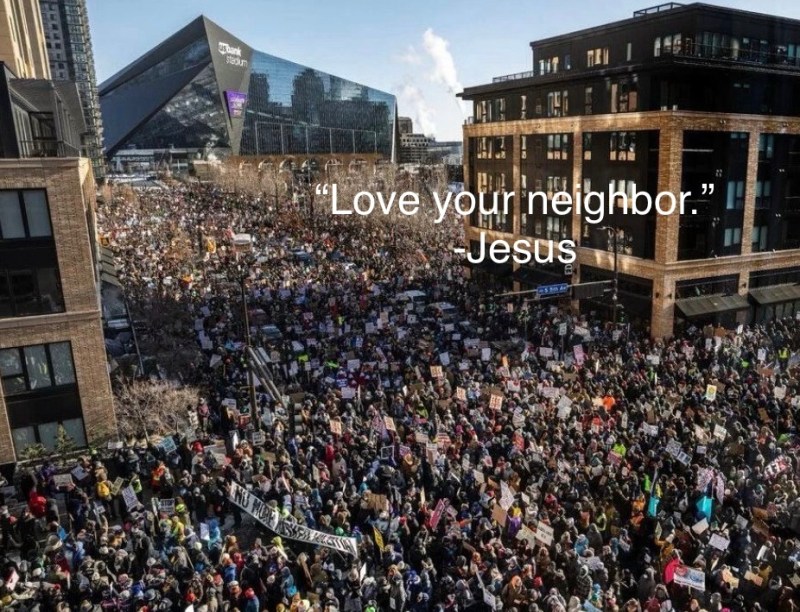
A commenter took issue with the message I was implying, saying:
It’s literally impossible for everyone pictured to be a “neighbor” in that locale. I lived and worked near there and even normal traffic flow was so anti “neighbor” that I had to sell the house and flee (kids getting shot in the park behind my house and whatnot). I’m confused about what conclusion you’re implying Jesus would demand for current American politics (and how a Bible verse requires a specific political conclusion). Please explain.
Fair question. In response, I said that for many, what Jesus demands of his followers in this moment can be found in Luke 10:25-37:
On one occasion an expert in the law stood up to test Jesus. “Teacher,” he asked, “what must I do to inherit eternal life?”
26 “What is written in the Law?” he replied. “How do you read it?”
27 He answered, “‘Love the Lord your God with all your heart and with all your soul and with all your strength and with all your mind’; and, ‘Love your neighbor as yourself.’”
28 “You have answered correctly,” Jesus replied. “Do this and you will live.”
29 But he wanted to justify himself, so he asked Jesus, “And who is my neighbor?” [COMMENT: he wants to see how narrowly he can define ‘neighbor’ so he only needs to love those he likes and approves of, e.g., his tribe. Jesus will have none of it…]
30 In reply Jesus said: “A man was going down from Jerusalem to Jericho, when he was attacked by robbers. They stripped him of his clothes, beat him and went away, leaving him half dead. 31 A priest happened to be going down the same road, and when he saw the man, he passed by on the other side. 32 So too, a worship leader, when he came to the place and saw him, passed by on the other side. 33 But a Samaritan, as he traveled, came where the man was; and when he saw him, he took pity on him. 34 He went to him and bandaged his wounds, pouring on oil and wine. Then he put the man on his own donkey, brought him to an inn and took care of him. 35 The next day he took out two denarii and gave them to the innkeeper. ‘Look after him,’ he said, ‘and when I return, I will reimburse you for any extra expense you may have.’
36 “Which of these three do you think was a neighbor to the man who fell into the hands of robbers?”
37 The expert in the law replied, “The one who had mercy on him.”
Jesus told him, “Go and do likewise.”
To “go and do likewise” in this moment for many Jesus-followers in Minnesota means moving toward those who are being harmed and mistreated, having mercy of them and standing in solidarity with them, being the healing presence of Jesus and bearing witness to those being left devastated (and sometimes dead) by the side of the road.
Some churches may end up serving quite literally as an “inn” of refuge, but many others are being transformed into food distribution centers. Many feel led to hit the streets and march and pray and protest peacefully.
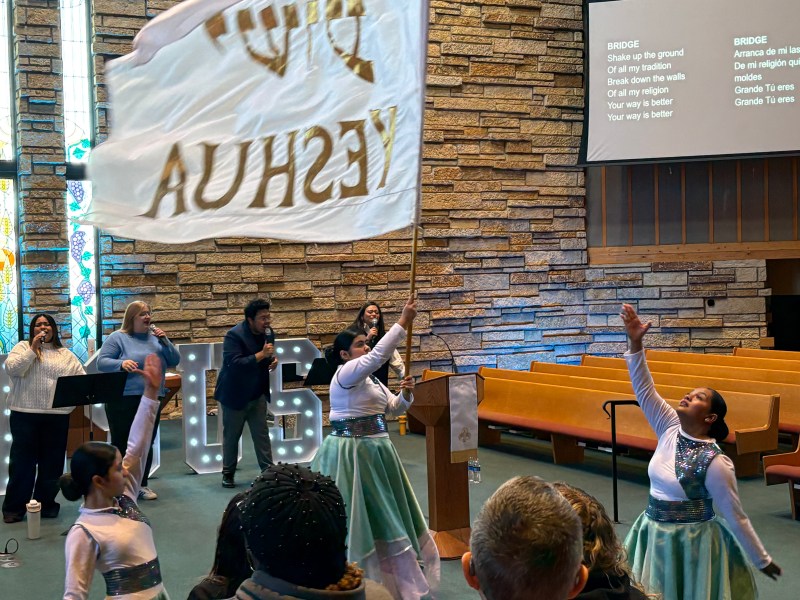
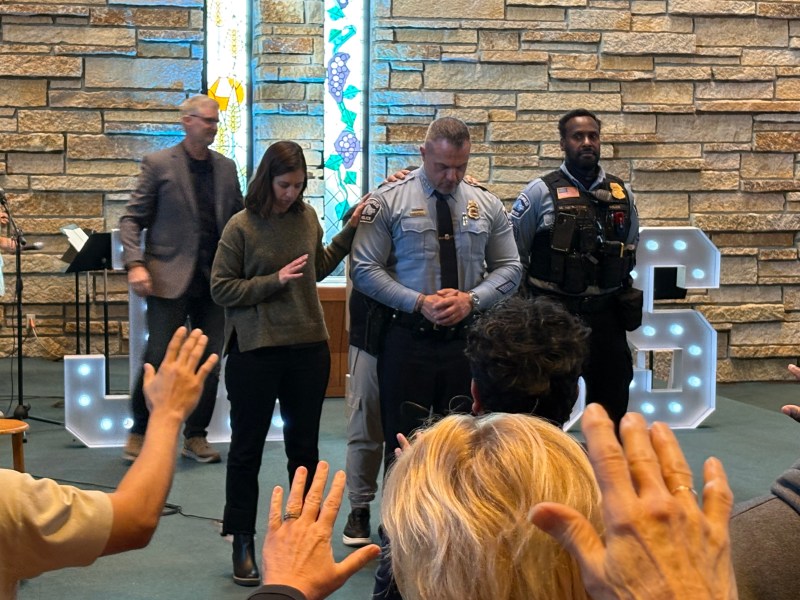
This past weekend I gathered with hundreds of pastors and leaders to worship in solidarity with our immigrant churches. We collected 6,000 pounds of food, and had the opportunity to pray over Minneapolis Police Chief O’Hara who expressed how tired he and his police department are. He shared his personal Christian faith and begs for our prayers.
The question Jesus presses us to reckon with is this: Will we show up and be a neighbor to the people hurting in our midst, or will we walk on by and look the other way because ____ [insert excuse]?
I’m so encouraged to see so many people trying to be neighbors who show mercy and “go and do likewise.” For, in the words of Jesus, “whatever you did for one of the least of these brothers and sisters of mine, you did for me” (Matt 25:40).
Want to be a good neighbor and make a concrete difference? Donate today to our Immigrant Neighbor Crisis Fund.
Discover more from Kingdom Harbor
Subscribe to get the latest posts sent to your email.
 Kingdom Harbor