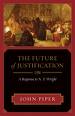
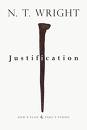
 We’re comparing the differences between John Piper and N. T. Wright on Paul and the New Perspective using helpful summaries compiled by Trevin Wax featured in the June edition of Christianity Today. Today we look at their respective views of the Law and Covenant.
What is the purpose of the Law and Covenant?
WRIGHT: God made a covenant with Abraham in order to set in motion his plan to rescue his world through Abraham’s family. God gave his people the Torah, his holy Law, as a pedagogue — a way to keep Israel, God’s wayward people, from going totally off track until the coming of the Messiah. Israel was supposed to embody the law and thus be a light to the nations. But Israel has failed at this task.
PIPER: God revealed himself through the Law, which pointed to Christ as its end and goal, commanded the obedience that comes from faith, increased transgressions, and shut the mouth of all humans because no one has performed the righteousness of the Law so as not to need a substitute.
Some of my impressions:
1. First, did any of you see the cover graphic for this article in Christianity Today? I found a subtle, back-handed jab at Wright in the graphic. If you haven’t seen it, it shows cartoony cut-out photos of Wright and Piper standing side by side with one gaping difference between them: Piper is preaching authoritatively standing on a platform of Bibles and Wright looks perplexed standing on…well…nothing at all. This is certainly not coincidental since the heart of the debate is over who’s perspective is more firmly built upon the Word of God. This particular artist has certainly chosen his side. =)
2. We again need to remind ourselves that we are dealing with a serious case of “both-and” when comparing Wright and Piper’s views above. Wright would agree with Piper’s summary and Piper would agree with Wright in this case. Just notice their emphasis again differs. How?
3. Wright emphasizes the covenantal purpose of the law — that is, the law was given to Israel as ethnic badges that mark them out as the covenant people of God. It’s main purpose is not, as Piper emphasizes, to reveal God. (E.g., What does “Do not eat shell fish” really tell us about God?) Wright emphasizes the pedagogical purpose of the Law in being a “schoolmaster” for this wayward people until Christ should come.
4. Piper, on the other hand, emphasizes the Law’s moral purpose of providing a righteous standard to which human beings are called to strive for by obedience. He emphasizes the Law’s moral purpose of providing a mirror by which we can see how far we fall short of the righteous standard God has set for us. Following Luther, Piper here suggests the Law’s main task is to show how desperately wicked and depraved people are in order to drive us to our knees and the throne of grace. Both of these emphases are found in Paul. This is not an “either-or” but a “both-and.”
4. I’m left with some unanswered questions: In what ways, according to Piper, does God reveal himself through the Law? His holiness? His character? His righteous standards? Does Piper’s emphasis on the Law as God’s moral standard to which we all fall short so that none can boast explain why God only gave it to Israel and not Gentiles as well? It seems that Wright and the New Perspective make more sense of the ethnic, national nature of the Law. Thoughts?
5. I’m again wondering how much Piper’s emphasis on the Law’s primary purpose of showing in some abstract, universal sense our need for a substitute is influenced by a more modern, individualistic salvation-by-transaction focus. I am not denying this is part of the Law’s purpose (cf. Rom 3:20b). I am merely questioning this emphasis and lack of focus on the distinction between Jews and Gentiles in regards to the Law’s purpose in God’s covenantal rescue plan.
6. Finally, related to #5, Wright stresses the temporary, incomplete role of the Law in God’s rescue plan through his covenant people. Piper’s view of the Law lends itself more to a permanent view of the Law as God’s eternal self-revelation and moral standard of righteousness that “shuts the mouths of all so that none can boast in their own works.” This seems to be a significant difference that must be addressed. Consider, e.g., Gal 3:23-25: “But before faith came, we were kept under the law, shut up unto the faith which should afterwards be revealed. Wherefore the law was our schoolmaster/pedagogue to bring us unto Christ, that we might be justified by faith. But after that faith is come, we are no longer under a schoolmaster.”
Much more to be pondered. What are your thoughts? Next time: How do Wright and Piper differ on their understanding of “God’s righteousness”?
Discover more from Kingdom Harbor
Subscribe to get the latest posts sent to your email.
 Kingdom Harbor