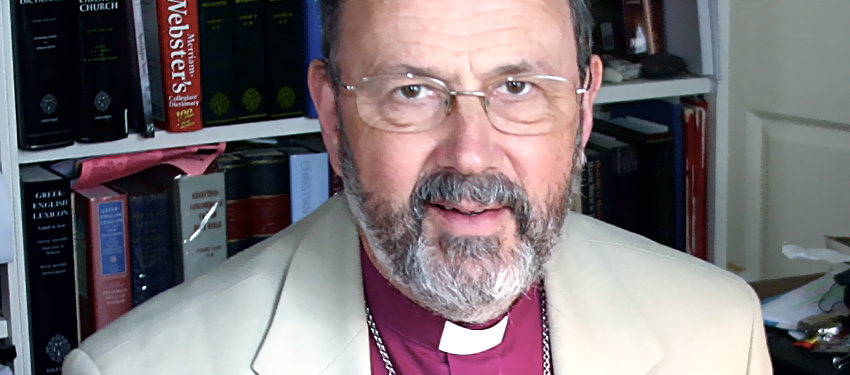
 How does the Bible exercise authority and guide our lives as people living in a post-modern age? N.T. Wright, bishop in the Church of England, addresses this issue in his must-read essay/lecture How Can The Bible Be Authoritative? Please check out the entire essay HERE. Below is an excerpt giving a taste of his narrative approach to Scripture. I have written extensively on the power of a narrative shaped faith in several essays available HERE.
The Authority of a Story
Suppose there exists a Shakespeare play whose fifth act had been lost. The first four acts provide, let us suppose, such a wealth of characterization, such a crescendo of excitement within the plot, that it is generally agreed that the play ought to be staged. Nevertheless, it is felt inappropriate actually to write a fifth act once and for all: it would freeze the play into one form, and commit Shakespeare as it were, to being prospectively responsible for work not in fact his own. Better, it might be felt, to give the key parts to highly trained, sensitive and experienced Shakespearian actors, who would immerse themselves in the first four acts, and in the language and culture of Shakespeare and his time, and who would then be told to work out a fifth act for themselves.
Consider the result. The first four acts, existing as they did, would be the undoubted “authority” for the task in hand. That is, anyone could properly object to the new improvisation on the grounds that this or that character was now behaving inconsistently, or that this or that sub-plot or theme, adumbrated earlier, had not reached its proper resolution. This “authority” of the first four acts would not consist in an implicit command that the actors should repeat the earlier parts of the play over and over again. It would consist in the fact of an as yet unfinished drama, which contained its own impetus, its own forward movement, which demanded to be concluded in the proper manner but which required of the actors a responsible entering into the story as it stood, in order first to understand how the threads could appropriately be drawn together, and then to put that understanding into effect by speaking and acting with both innovation and consistency.
This model could and perhaps should be adapted further; it offers, in fact, quite a range of possibilities. Among the detailed moves available within this model, which I shall explore and pursue elsewhere, is the possibility of seeing the five acts as follows: 1) Creation, 2) Fall, 3) Israel, 4) Jesus. The New Testament would then form the first scene in the fifth act, giving hints as well (Rom. 8; 1Cor 15; parts of the Apocalypse) of how the play is supposed to end. The church would then live under the “authority” of the extant story, being required to offer something between an improvisation and an actual performance of the final act….
Story and Hermeneutic: Living in the Fifth Act
In the church and in the world, then, we have to tell the story. It is not enough to translate scripture into timeless truths. How easy it has been for theologians and preachers to translate the gospels (for instance) into something more like epistles! We must, if anything, assimilate the epistles to the gospels rather than vice versa. I would not actually recommend that, but if you were going to make a mistake that would be the direction to do it in. And as we tell the story – the story of Israel, the story of Jesus, the story of the early church – that itself is an act of worship. That is why, within my tradition, the reading of scripture is not merely ancillary to worship – something to prepare for the sermon – but it is actually, itself, part of the rhythm of worship itself. The church in reading publicly the story of God is praising God for his mighty acts, and is celebrating them, and is celebrating the fact that she is part of that continuous story. And, that story as we use it in worship reforms our God-view – our world-view – reconstitutes us as the church. The story has to be told as the new covenant story.
This is where my five-act model comes to our help again. The earlier parts of the story are to be told precisely as the earlier parts of the story. We do not read Genesis 1 and 2 as though the world were still like that; we do not read Genesis 3 as though ignorant of Genesis 12, of Exodus, or indeed of the gospels. Nor do we read the gospels as though we were ignorant of the fact that they are written precisely in order to make the transition from Act 4 to Act 5, the Act in which we are now living and in which we are to make our own unique, unscripted and yet obedient improvisation. This is how we are to be the church, for the world. As we do so, we are calling into question the world’s models of authority, as well as the content and direction of that authority….
Discover more from Jeremy Berg
Subscribe to get the latest posts sent to your email.
 Jeremy Berg