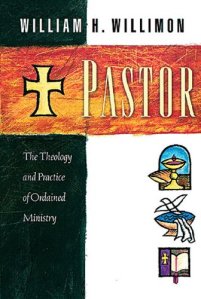
 Another excerpt from Will Willimon’s book “Pastor.” In this section, Willimon addresses a mindset common among Baby Boomers (and passed down to their children, I might add):
“A few years ago, three sociologists, noting the huge decline in memberships being suffered by mainline (now fast becoming the old-line or sidelined) denominations, described what they termed “the emergence of lay liberalism” within these churches. After surveying five hundred of the churches’ baby boomers, they found that 92 percent described themselves as “religious,” but only 62 percent claimed to be church members, and just 47 percent worshiped at least twice a month. Among them, church membership was optional in their practice of faith. Most surprising, the same position was held among those who went to church. “Eighty percent of active Presbyterians and seventy-two percent of other mainline participants agree. Even among the fundamentalists this position is held by forty-five percent of Boomers.” Even those who attend church see their church activity as thoroughly tangential to their faith.
Furthermore, the boomers seem to agree that, if they are Christian, it is a mere
accident of birth. . . . Many Boomers go so far as to say that they would be content if their children adopted non-Western religions “as long as they are happy” and as long asa they are moral citizens. . . . They give little credence to the pronouncements of the institutional church or to religious tradition. Moreover, in the wake of nineteenth-century challenges to biblical literalism, the Reformations’s allegiance to sola scriptura holds little sway. . . . The basis for religious authority narrows to personal experience, which becomes the touchstone of their religious and moral affirmations.
This phenomenon of a generation trapped within the confines of its own radically individualized personal experience, with no sense of external authority or truth beyond what has personally happened to them, makes “lay liberalism”
very shifting sand on which to build a religious community. It has no inherent loyalty factor upon which institutions can depend for sustained support. Rather, it promotes an ethos in which church involvement is strictly optional, and the option is to be exercised solely at the discretion of the individual. As a result lay liberals become religious consumers, seeking the religious services that meet their personal wants.
Catechesis that addresses these “lay liberals” cannot avoid being confrontational. It will unmask the cultural captivity of their alleged “freedom,” the conformist nature of their vaunted “individualism.” It will see itself as rescuing these spiritual consumers from the bondage of the self, and liberating them from their notion that reality is nothing more than a personal contrivance. It will tell a counter story to the world’s stories of who we are. It will teach us the words and the moves in order to see ourselves as members of the adventurous journey known as discipleship.”
p. 218-219
*Block quotes from Donald A. Luidens, Dean R. Hodge, and Benton Johnson, “The Emergence of Lay Liberalism Among Baby Boomers,” Theology Today 51 (July, 1994): 249-55.
Discover more from Kingdom Harbor
Subscribe to get the latest posts sent to your email.
 Kingdom Harbor