
“The Word of God is alive and active” (Heb. 4:12).
In her beautiful poem below, Terri Churchill invites us to engage God and the Bible with all our senses, engaging our imagination and moving beyond “dead ink” in our daily devotions.
WORDS by Terri Churchill
I’ve been trying to reach You climbing a tower of words, babbling words – dead ink.
My heart cannot speak this language, so it smiles politely and nods its head, and pretends to understand.
But your words are not like this.
You opened your mouth and creation said “yes” and appeared from nothing.
Day and night oceans and land and me – all this with a few words.
I want to hear you this way.
I want to hear you in flesh and blood and blinding colors and music that carries me to you.
Can you carve your meaning into my heart?
Will you say to the motionless ink, “Rise and walk”?
I (Jeremy) have often observed in devoted Bible-reading circles, such as with my students at Christian colleges, that as much as we talk about having a personal relationship with Jesus, many of us in practice have more of a personal relationship with the Bible.
A student will come up to me and say, “I just don’t feel close to God these days.” The next thing they often say is revealing and goes something like, “I’ve been doing my daily devotions” or “I keep reading the Word (Bible), but I’m just not getting anything.”
Shockingly for a Bible professor and pastor, I have found myself telling such a student they should maybe set their Bible aside and ditch their devotions for a week. Instead of turning to the Good Book, try turning to the Good Lord on a morning walk and just talk to Him. Be with Him. Listen for His voice. The Word became flesh; let’s not turn the Living Incarnate Word back into mere words!
While Jews, Christians, and Muslims all claim to be “people of the Book,” Christians alone audaciously claim that the Book took on a Body, the Word became flesh. God’s Law etched on stone tablets took on a heart of flesh. This enfleshed Word, writes John, “we have SEEN with our eyes, which we have looked at and our hands have TOUCHED—this we proclaim concerning the Word of life” (1 John 1:1). God’s truth in the abstract became God’s Truth-in-Person. (I recently expounded on this in my piece entitled “Truth Bomb.”)
While I wholeheartedly encourage daily quiet time “in the Word”, and God speaks to me most clearly through the Scriptures, the Holy Trinity is not the Father, Son and Holy Bible, nor did Jesus promise to send us the canon of the New Testament after his departure to “lead us into all truth” (John 14-16). Jesus gave us the Holy Spirit who is as predictable as the wind: gently breathing life into us one moment, while blowing down our foolish beliefs built on the sand like the Big Bad Wolf the next.
Some unhealthy forms of Biblicism lead to a relationship with the Bible that borders on bibliolatry, the worship of a book, idolatrous homage to a book, or the deifying of a book. We may need to examine our spiritual engagement with God, and see if we operate more like practical atheists devoted to reading a Holy Book, while failing to seek His face or listen for His Voice beyond the dried ink on the page.
Are we walking in a genuine relationship with God, or merely having a love affair with dead ink on a page? Does God stand wild and free behind, above, beneath, and around the text as we read, poised to pounce and prod us by the Spirit? Or, like Thomas Jefferson, do we stand over the text, combing through the New Testament for ethical principles we admire, while denying presence of the supernatural?
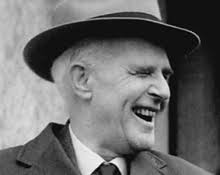
My thinking on this has been influenced by 20th century theologian Emil Brunner who wrote about truth as encountering God in relationship, rather than truth as only statements about God (i.e., doctrines) requiring intellectual assent as beliefs. We’re saved by an encounter and relationship with the Living Christ who saves, not merely by reading and believing certain abstract saving truths about Christ found in Scripture. Here’s a taste of Brunner:
In Christ God Himself lays his hand on me, he opens Himself to me and opens myself to Himself, He breaks through to me through the walls of my I-solation. He establishes fellowship with me and thereby at once becomes my Lord. –The Divine Human Encounter, Emil Brunner
I read the Bible in hopes of encountering the living God in and through it, but God is not to be equated with the text. The ultimate Word of God is not bound between leather covers, but the Incarnate Word of God, Jesus Christ. In his earthly ministry, Jesus was wild and free and unable to be contained, pushing the boundaries and bursting “wine skins.”
Likewise, by the Spirit the Incarnate Word moves today freely in and out of our devotional practices, invading our quiet time reading the Bible, romancing us on a morning walk in the woods or rebuking us in a heated shouting match with him in the car. “He is not a tame lion,” Lewis said of his Christ figure Aslan.
Do we try to tame Christ’s prowling presence and keep his disruptive words locked safely in the cage of our quaint and cozy quiet time, or sentimentalized in a completely non-threatening Verse-A-Day Bible Calendar?
Pope Francis addressed a crowd a while back with a similar message, saying the words contained in Scripture were “not written to remain imprisoned on papyrus, parchment or paper, but to be received by a person who prays, making them blossom in his or her heart.”
“It irritates me a little when I hear Christians who recite verses from the Bible like parrots: ‘Oh, yes, the Lord says (this), he wants this.” The Pope speaks of “encounter” as the goal. “Did you encounter the Lord with that verse? It is not a question only of memory; it is a question of the memory of the heart, that which opens you to the encounter with the Lord. And that word, that verse, leads you to the encounter with the Lord,” he said.
I did a whole series of posts on the different ways we approach the Bible years ago you may want to check out. My own life was interrupted and transformed by my own radical encounter with the Word in college which I have written about a lot and even began an unfinished memoir of sorts in 30+ blog posts called Divine Summons.
May we continue to center our faith in a dynamic relationship with Jesus, the Word Incarnate, and courageously yield to his wild and untamed movements in our lives. May we seek fresh encounters with Him in Scripture, but let us not restrict His presence to those precious pages. He’s not a tame Savior and Word.
Discover more from Kingdom Harbor
Subscribe to get the latest posts sent to your email.
 Kingdom Harbor