I took my oldest son to see The Odyssey on opening weekend. As we sat with our garbage can sized popcorn in our lap watching the previews, Peter reminded me that I tried to read Homer’s classic epic to him when he was WAY too young. We didn’t get far into it that time, but it whet his appetite and he was excited to watch Christopher Nolan’s interpretation on the week that he got his driver’s permit.
We both enjoyed it. But I wasn’t prepared for the morality of the Law of the pagan god Zeus to sound so much like the Law of Moses (at least in this interpretation). The film had a very timely moral “Christian” message from the lips of a pagan that many would-be Christians need to hear in these days of amoral and immoral politics.
Esau McCaulley of the Holy Post shared the following piece on the film. Check it out and subscribe to the Holy Post.
Odysseus Couldn’t Outrun His Conscience. Neither Should We.
The Odyssey & America’s Long Journey Home
| By HOLY POST MEDIA AND ESAU MCCAULLEY | JULY 23 |
I saw Christopher Nolan’s newest blockbuster, The Odyssey, twice in its opening weekend. I didn’t expect the classic tale of gods, monsters, and battles to confront me with the long-term implications of the Trump presidency, immigration policies, and the realities of Black parenting, but Homer’s epic stands the test of time for a reason. As he navigates an ancient world, Odysseus carries messages for us here in the United States of America, 2026 AD.
In his interpretation of The Odyssey, Christopher Nolan complicates the protagonist. Instead of chronicling a triumphant and cunning Odysseus’ journey from Troy back to his homeland of Ithaca, we witness a hero who’s won a great victory but is haunted by what it has wrought. Many have noted that it is something of a spiritual or emotional sequel to Nolan’s previous film, Oppenheimer, which also features a “great man” struggling with the implications of his victory.
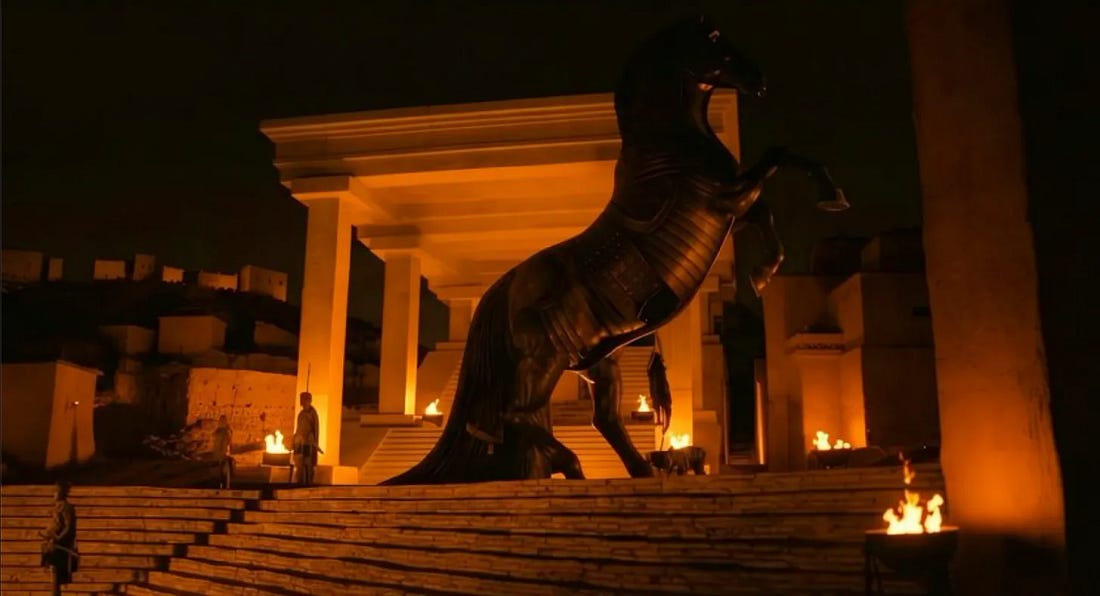
In order to sack Troy, Odysseus broke the social contract of Zeus’ Law: show hospitality to strangers and treat them as you’d like to be treated, for they may be gods in disguise. Initially masquerading as a symbol of peace, the Trojan Horse is unveiled in the dead of night for what it truly is: an instrument of war and destruction. Mutual trust between nations dissolves, signaling the end of one world and the beginning of a new one. The world that emerges is less safe and less free. It’s a world with no code of conduct, a world in which sacred bonds are trampled by military expediency. Odysseus must reckon with the fact that he’s opened Pandora’s box: there’s no going back to how things used to be.
It struck me to see this protagonist possess the power of self-reflection: the ability to see what he has done and at least point to alternative paths he could have taken. Odysseus retains the capacity to view his enemies as persons whose death is a tragedy that diminishes even the victors. He understands that profound loss can lie hidden within success. Odysseus is able to engage in one of the most Christian activities: reflection and repentance. He reveals the capacity to see the image of God, even in his enemies, and not see them as minor inconveniences along his path to glory and renown. It seems the moral core of Zeus’ Law is still aflame in his heart and conscience.
Watching a central character with the power of introspection ponder what the world has lost through his actions made me freshly aware of how little of this we see in our president. He has won two elections and gained almost total control of his party, and profoundly changed the culture of this country in the process. There’s been a noticeable degradation of civility, a decreasing ability to cooperate or engage in genuine discourse and debate with those we disagree with. Our president seems incapable of seeing his opponents as human beings worthy of respect. He groups people into one of two categories: supplicants, or those who must be destroyed. Every political leader at some point must face not only their successes, but also their failures. That reflective ability seems completely absent in this administration. Any struggles are due to the previous administration, the “fake news” media, other nations, or the Democrats.
There is no lament over the loss of hospitality, the growing distrust we have of each other and the institutions that bind our republic together. There seems to be no weeping over the lives lost during his immigration crackdown. When our 18th soldier died recently, he put up a post comparing the death toll in this war compared to others as if human lives were a scorecard. He regularly levies threats of military or economic devastation of other nations. He tosses aside former allies all in an attempt to get his way. But the question of the cost never seems to enter his mind. Instead, he still rages about the election he lost in 2020. It would be like Odysseus trying to convince the people of Ithaca that he was only outside the walls of Troy for 8 years and not 10.
This may be the secret to all of this cruelty: intentional blindness. It’s possible to inflict great harm if you close your eyes and refuse to see, if you only ever look forward and never backward or inward. Maybe you can only gain the world if you ignore your soul, if you desensitize your conscience. The work of the church, when it is at its political best, is precisely the power of sight: the ability to first see our own sins and failures and then point to the ways in which the world might be better than it currently is. Living up to our calling as witnesses to Christ and his Kingdom entails telling the truth about what we’ve seen.
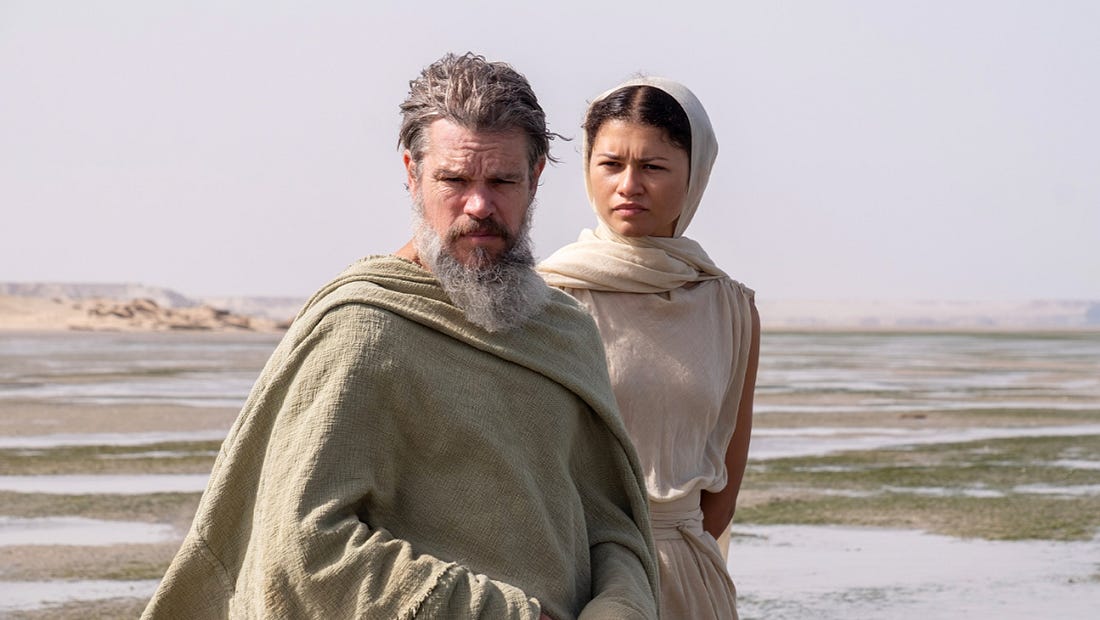
When The Odyssey ended, I got in my car to return home with my son who had watched it alongside me. The weekends we have with him in the house are vanishing quickly. Soon he will be off to college to begin his own journey of self-discovery.
I couldn’t help but think about all that’s changed over the years that he’s been with us, what we’ve seen and experienced together. He was born less than a year before Obama took office. He was 7 years old when Tamir Rice was fatally shot, 13 when George Floyd was murdered, 17 when ICE descended upon Chicago. He’s come of age as so much has fallen apart, and I have tried my best to point him to hope and God amid it all. I’ve tried to remind our children that no “great man or woman” has the final say in the human epic – that role is reserved for our Creator. Nonetheless, I grieve the ways America’s heart has hardened, mutual trust has broken down, and empathy and compassion for the vulnerable have diminished. I ache not for some golden age that never existed, but for all of the choices that led us to this place. In my most Christian moments, I recognize this as a longing for the Kingdom we’re promised, but still await.
It only took us 15 minutes to return home from the theater, but for our country and the Church, the journey will take much longer. There are no shortcuts. The midterms cannot fix it. The 2028 election cannot fix it. No single election can re-knit the frayed bonds between us. And worse yet, life is no movie. We have no Matt Damon with a moment of extended monologue to explain what we’ve become. We have no one to repent for us – our president seems incapable; we will have to do it ourselves. We will have to face who we are and what we’ve become. If Nolan is correct, the only way to begin the journey home is to see with absolute clarity how far we’ve wandered – not geographically, but morally – and recover the flame of conscience within.
Discover more from Kingdom Harbor
Subscribe to get the latest posts sent to your email.

