“Even handkerchiefs and aprons that had touched him were taken to the sick, and their illnesses were cured.” Acts 19:12
We all hope that everything we have read about, studied and believed about God from sermons and Bible studies will prove true and reliable when our faith is tested in the fire.
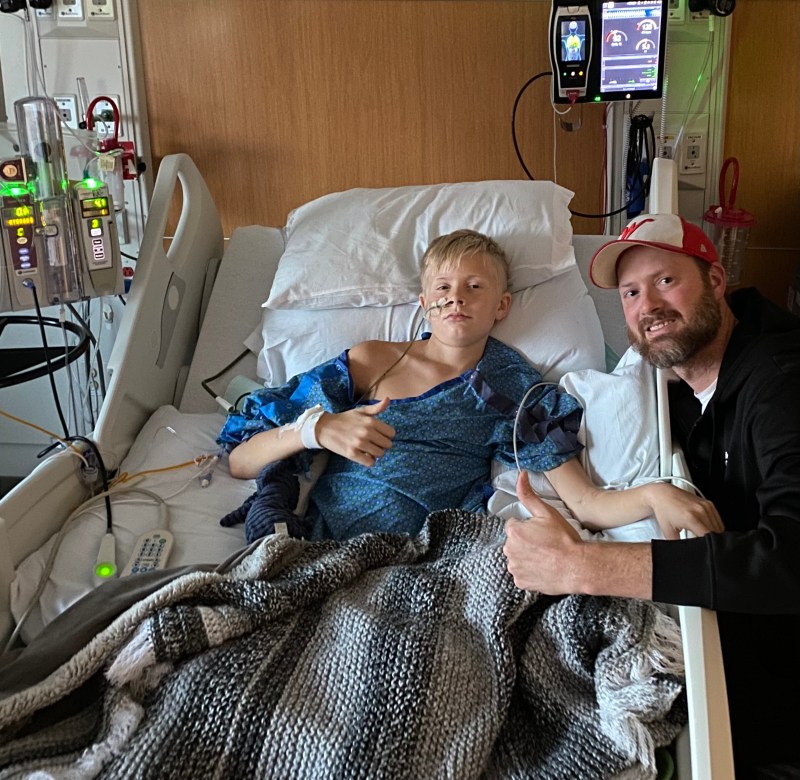
My faith was tested a few years ago when I sat in the ICU for 31 days watching my 10 year old son, Isaak, teeter on the edge of death. I had some trusted pastors I leaned on during the darkest moments, and friends and family showed up with visits, cards, meals, and words of love.
But I’ll be honest: words alone felt impotent. They didn’t minister to me. Even Bible verses meant to comfort me rarely penetrated my soul. I already knew all the verses. I knew all the right things I was supposed to believe. I’d preached them from the pulpit and taught them in classrooms. And I cringed and held my tongue a few times at some well-meaning but vacuous Christian cliches offered such as “God has a purpose for all this.”
What did minister to me most powerfully, however, were two things. First, the presence of the right people at the right moments who sat silently with me, offered a hug, or let me cry on them. And second, the Apostle Paul’s handkerchief. Say what now?! Okay, not Paul’s actual handkerchief, but a deep and desperate belief about God I chose to cling to during those long days that want to share more about now.
Western Christians tend toward a gnostic and/or Platonic form of faith that is chiefly about adopting a set of beliefs, holding correct doctrine, praying to a distant God who exists in ethereal bliss far from the muck and mud of our lives on earth. Our worship often centers around the preached Word. Words, words, words. Bible, Bible, Bible. Just believe the right ideas and someday your faith will become sight, and God will become real and tangible in Heaven. But such a vaporous faith focused mainly on holy ideas and words in my Bible neglects the centerpiece of Christianity: the incarnation.
The Word became flesh. The truth became a person. God’s eternal presence has been made tangible. God wants to touch us, and allows us to touch Him. We take up his Body and eat. We bring the cup to our lips and drink in His forgiveness. We’re plunged into H2O of grace in baptism, coming out dripping and are wrapped in a towel just as we’re clothed with Christ’s righteousness. The Word became flesh, but our preachers and our ministries often insist on turning our incarnational faith back into merely words—words from the pulpit, words of the creeds, words in our Bible studies.
During Isaak’s 30 days in the ICU we were given a “prayer shawl” that had been knit together in love by a group of church ladies, and consecrated by their deacons. For 30 days I gently laid that “Jesus blanket” across Isaak’s embattled body and visualized God’s love and grace wrapping and covering our boy in his hour of need. Through three life-saving surgeries, and the long agonizing hours watching his body be ravaged by infection and sepsis, I clung to the hope that our Father who art in Heaven might infuse that ordinary blanket with His healing power and divine presence.
You may be thinking that this was a weak moment when I lost my head and started believing in magic blankets and medieval superstition. Honestly, for years I did roll my eyes at (usually) the Roman Catholic or Eastern Orthodox Church’s teaching about relics — how the bones or possession of a dead saint could be a way to connect with the divine. I felt similarly about those who go on pilgrimage to the Holy Land to stand on the same shore that Jesus walked on, or touch the place where he was born in the Church of the Nativity. “God is Spirit, and I can communion with Him anywhere,” I would say. “God is not more powerfully present in this or that physical space,” my incarnation-averse self asserted.
But Paul’s handkerchief begged to differ and continued to challenge me. The Bible, not medieval Catholics, revealed a God who condescends to make His healing power and presence available in ordinary objects such as dirty aprons and snotty handkerchiefs. Paul’s handkerchief pointed me to a more incarnational faith and a less gnostic view of God. So we read in Acts 19:
“God did extraordinary miracles through Paul, so that even handkerchiefs and aprons that had touched him were taken to the sick, and their illnesses were cured and the evil spirits left them” (Acts 19:11-12).
To be clear: the source of the power was not Paul, the handkerchief, the apron, or the prayer shawl that covered Isaak. “God did extraordinary miracles through Paul” and the these items, just as God’s grace touches us uniquely in the waters of baptism and the bread and the wine of the Eucharist. Just as God’s power went out from the hem of Jesus’ garment when a sick woman touched it in faith, so God wants to touch us and allows us to reach out and touch Him.
Does your faith keep God upstairs and far away from your troubles? Do you cling only to the words and promises of God in the Bible when you also need God to meet you in a more tangible way? My approach to prayer and the way I minister to the sick has been transformed by this more incarnational view of God.
Yesterday I dropped off a prayer shawl with a friend who is about to begin cancer treatment with this message:
May you wrap yourself in this blanket often, bring it to appointments and treatments. May the Spirit help you believe, imagine, and visualize that the God of Heaven is somehow mysteriously wrapping you with His love, covering you with His grace, and, we pray, healing you with His power according to His will.
This is not about magic blankets or medieval superstition. It’s good Biblical teaching and solid sacramental/incarnational theology. It’s the good news that we have a God who continues to come down to meet us wherever we are and in some strange ways—even through a dirty handkerchief, a greasy apron, or a blanket knitted in love.
“That which was from the beginning, which we have HEARD, which we have SEEN with our eyes, which we have looked at and our hands have TOUCHED—this we proclaim concerning the Word of life” (1 John 1:1).
Discover more from Kingdom Harbor
Subscribe to get the latest posts sent to your email.
 Kingdom Harbor